How Many Sessions Are Needed for Full Body Tan Removal?
TLDR: The number of sessions needed for full body tan removal depends on tan depth, skin type, the treatment chosen, and the body area being treated. This guide gives you a clear, realistic picture of what to expect before you begin.
Introduction
Most people start with a simple question: how long will this actually take?
It is a fair question, and one that rarely gets answered clearly. You search online and find vague timelines like "a few weeks" or "it depends" with no real explanation of what it depends on or why.
Full body tan removal is not a single-session fix. But it is not an indefinite process either. With the right approach and realistic planning, visible results are absolutely achievable. This guide breaks down session counts, treatment timelines, and body-area specifics so you know exactly what to expect.
Why Full Body Treatment Is Planned Zone by Zone
Tan does not sit at the same depth across the entire body. It builds differently depending on how much each area is exposed, how thick the skin is in that zone, and how long the pigmentation has been accumulating.
That is why the sessions needed for your arms may differ from what your back or legs require. A specialist assesses tan depth across each area before any treatment begins, and that zone by zone assessment is the foundation of your session plan.
Five Factors That Shape Your Session Count
Depth and age of the tan. A recent, mild tan needs fewer sessions than one that has accumulated over months or years.
Skin type and melanin levels. Skin with naturally higher melanin levels responds differently, and the session approach is calibrated accordingly for both effectiveness and safety.
Body area. Thicker-skinned areas like the back and legs respond more gradually than the face or neck.
Session consistency. Skipping sessions or extending gaps beyond what is recommended slows progress significantly.
Daily habits between sessions. Protective habits between sessions directly affect how quickly results build and whether the overall session count creeps up.
Session Counts by Treatment Type
If you are still weighing up which approach suits your skin, our guide on choosing between a peel and laser covers the key differences in depth.
Chemical Peel Course
Peels are spaced two to four weeks apart to allow the skin to complete its renewal cycle between treatments.
- Mild to moderate tan: three to five sessions
- Older or deeper tan: five to seven sessions
Visible change builds steadily from session two or three onward. Each session clears a layer of pigmentation, and the skin arrives at the next session in better condition than before.
Laser Course
Laser sessions are spaced three to four weeks apart, giving the body time to clear fragmented pigment.
- Typical full body tan: four to six sessions
- Deeper or widespread pigmentation: up to eight sessions
Results begin to show from session two onward. Laser sessions are brief and involve minimal downtime, making them practical for larger zones like the back, arms, and legs.
Combining Peels and Laser
A combined approach can reduce the total number of sessions compared to using a single method for more complex cases. It typically looks like phased treatment, with peels to refine surface layers followed by laser to target what remains underneath.
Timeline by Body Area
|
Body Area |
Typical Sessions |
Approximate Timeline |
|
Face and neck |
3 to 5 |
6 to 12 weeks |
|
Arms and hands |
4 to 6 |
8 to 16 weeks |
|
Back and shoulders |
5 to 7 |
10 to 18 weeks |
|
Legs and knees |
4 to 6 |
8 to 16 weeks |
|
Full body (combined) |
5 to 8 |
12 to 20 weeks |
These are realistic ranges, not guarantees.
Why Some Zones Take Longer
The back, shoulders, and outer arms sit at the longer end. These areas receive the most cumulative sun exposure over the years, the skin is thicker, and pigmentation has usually had more time to settle deeper. The face and neck respond faster because the skin renews more quickly and clinical treatments are typically more refined in this zone.
What Happens Between Sessions
The gap between sessions is not downtime. It is an active part of the treatment process. The skin is renewing, fragmented melanin is being cleared, and pigmentation continues to fade. Visible results often keep improving for one to two weeks after each session.
Why the Interval Matters
Sessions that are too close together do not give the skin enough time to renew. Sessions that are too far apart allow the process to stall and can mean you lose some of the momentum built in the previous session. Your specialist will recommend the right interval based on how your skin is responding.
Tracking Your Progress
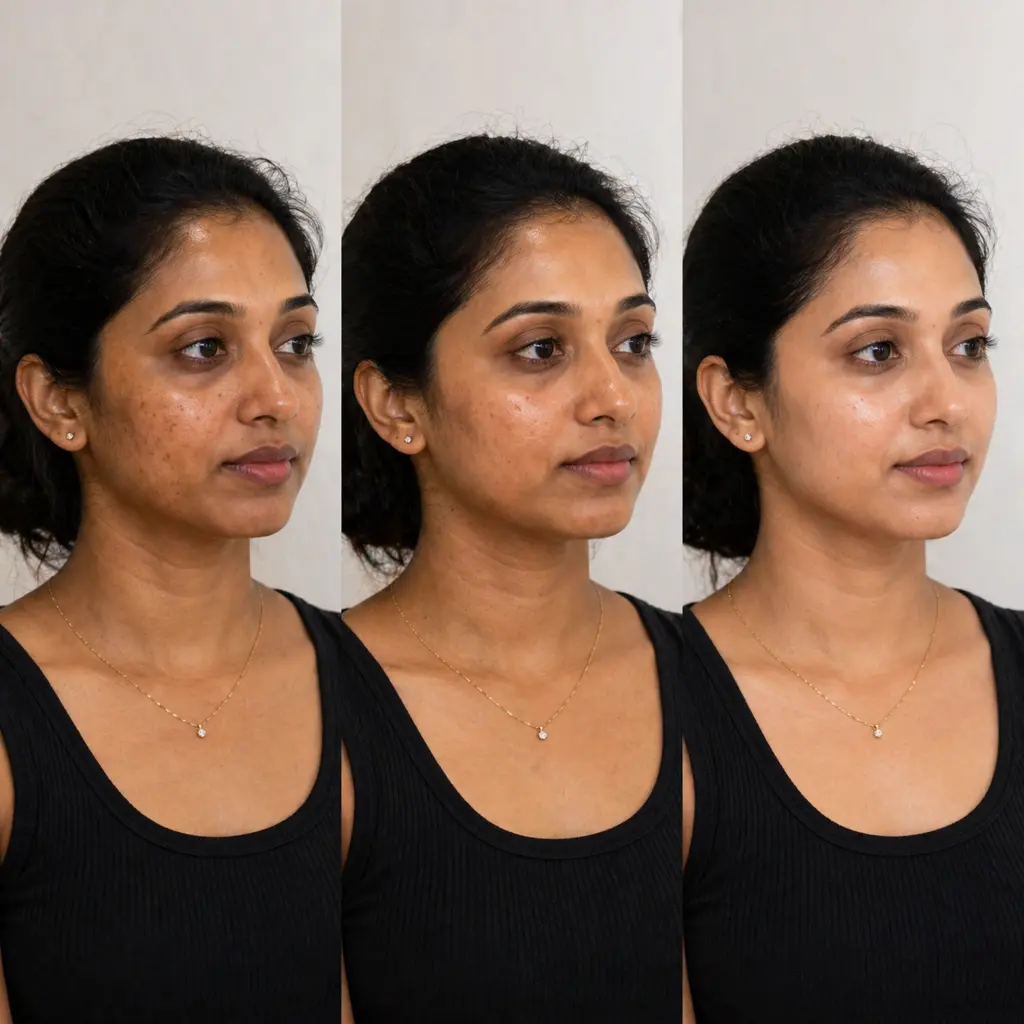
Take photos of each treated area before your first session and then after every two sessions, in the same lighting and position. Progress across a full body course is gradual and cumulative, and day to day observation can make it harder to see how much has actually changed. A comparison every few weeks gives you a much clearer picture.
Maintaining Your Completed Course
Completing your course of sessions is only part of the commitment.
Once your full course is complete, periodic maintenance sessions help sustain the even skin tone you have worked towards. How often these are needed depends on your lifestyle, sun exposure habits, and how your skin responds over time. For most people, one maintenance session every three to six months is enough to keep results looking their best. If you are unsure about maintenance timing, understanding how long tan removal results hold over time can help you plan more effectively.
The skincare routine during and between maintenance sessions stays gentle and supportive. Abrasive or overly active products, while the skin is in a renewal phase, can interfere with the results you have built.
Frequently Asked Questions
Can tan be completely removed in one session? No. A single session begins the work, but multiple sessions are what clear the pigmentation meaningfully. The depth and age of the tan determine how many sessions are needed.
How many sessions does full body tan removal take? Most people need five to eight sessions, depending on the treatment chosen and body areas being treated. The complete timeline typically spans twelve to twenty weeks, with visible improvement building progressively from session two or three onward.
Can I treat different body areas in the same session? Yes, and this is often the most efficient approach. A single appointment can cover multiple zones, with the specialist adjusting technique and intensity for each area. This is why a zone by zone assessment at the start matters, as it lets your plan cover everything in a coordinated way.
Conclusion
Full-body tan removal is a process that rewards patience and consistency. The number of sessions you need depends on your skin, your tan, and the treatment approach that is right for you.
What is consistent across every case is this: results build progressively, and each session moves you closer to the even, clearer skin tone you are working towards.
Start Your Journey the Right Way
At Tune Clinical Aesthetics, every plan begins with understanding your skin. We assess your tan depth, skin type, and the specific body areas you want to address before recommending any approach. So the session plan you get is realistic, personalised, and designed around you.
Visit tuneaesthetics.com to get in touch with our team.