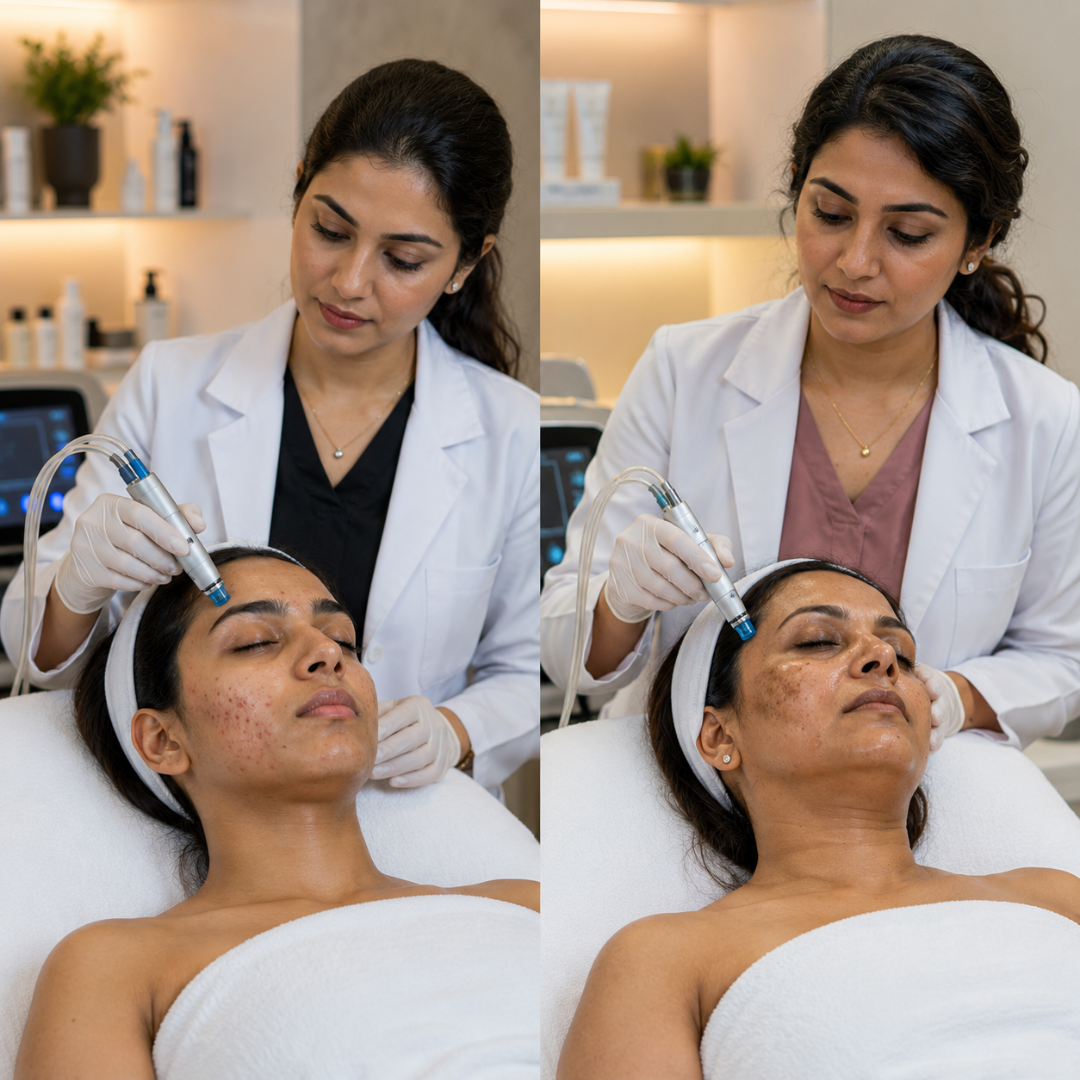
HydraFacial for Ageing Skin: How Results Differ from Younger Skin
Introduction
A HydraFacial gives almost everyone an instant glow, but the way that glow behaves depends a great deal on the age of the skin underneath. The same treatment that simply tops up youthful skin can make a more noticeable difference on ageing skin, while also reaching its limits sooner.
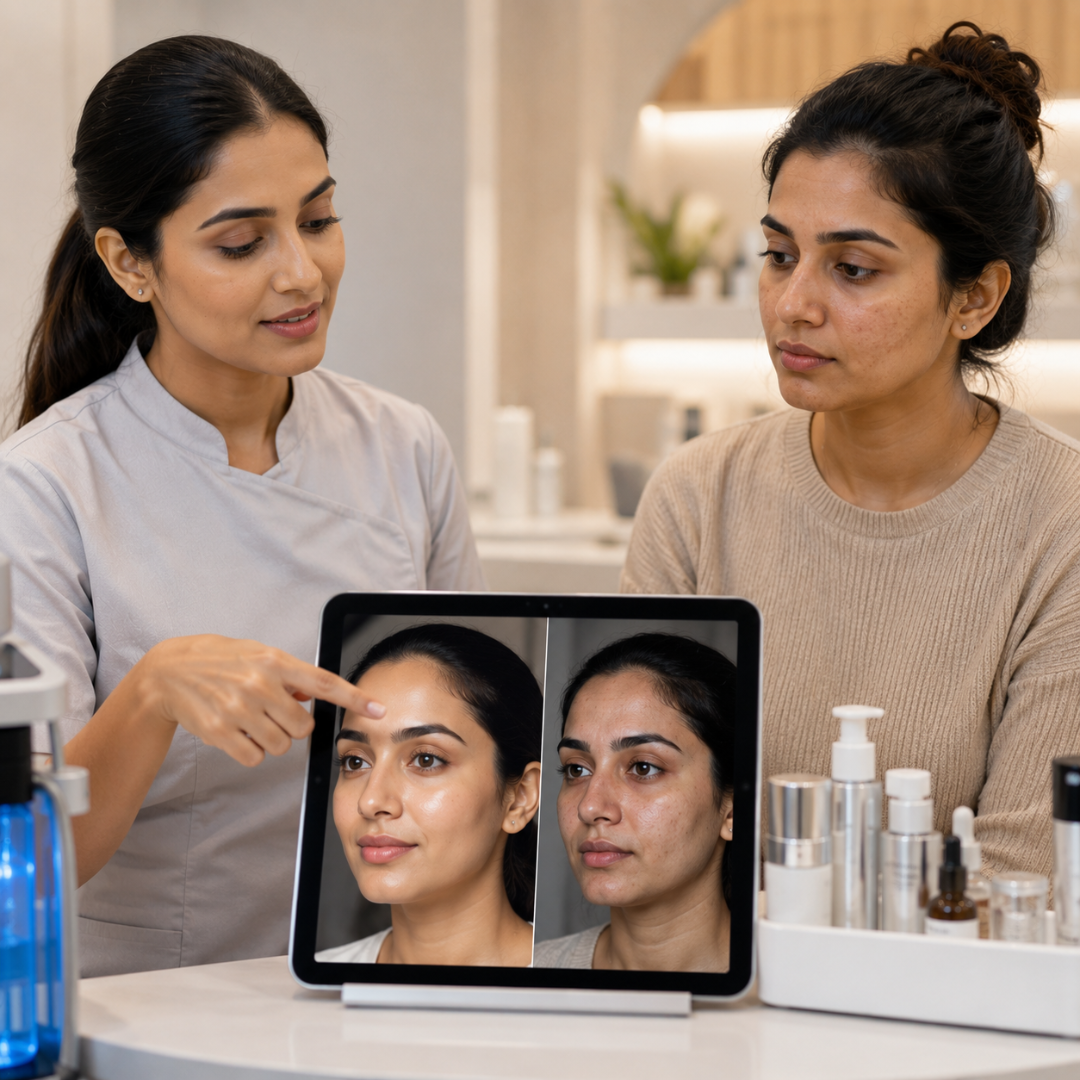
If you are over 40 and wondering what a HydraFacial will really do for you, it helps to understand how ageing skin responds differently from younger skin, so you know what to expect before you book.
Many of our clients over 40 are pleasantly surprised by how much brighter and fresher their skin looks after a session, simply because it had drifted so far towards dull and dry beforehand.
How Ageing Changes the Way Skin Responds
Skin does not age in one dramatic step. It shifts gradually, and several of those changes affect how it takes a facial.
As the years pass, cell turnover slows, so dead cells linger longer, and the surface looks duller. The skin makes less oil and holds less water, which leaves it drier and thinner. Collagen and elastin, the support that keeps skin firm and springy, steadily decline, so fine lines settle in, and the skin feels less plump.
Thinner skin also means the barrier is easier to disturb, so ageing skin tends to do better with gentle, hydrating treatments than with harsh scrubs or strong peels, which is exactly where a HydraFacial fits.
None of this stops a HydraFacial from working. In fact, because ageing skin starts from a duller, drier baseline, the lift in hydration and brightness is often more visible than it is on younger skin. Many people choose this hydrating facial treatment because it helps refresh skin that has become dry, dull, and less radiant over time. What changes is how much the treatment can do on its own, and how long the result holds.
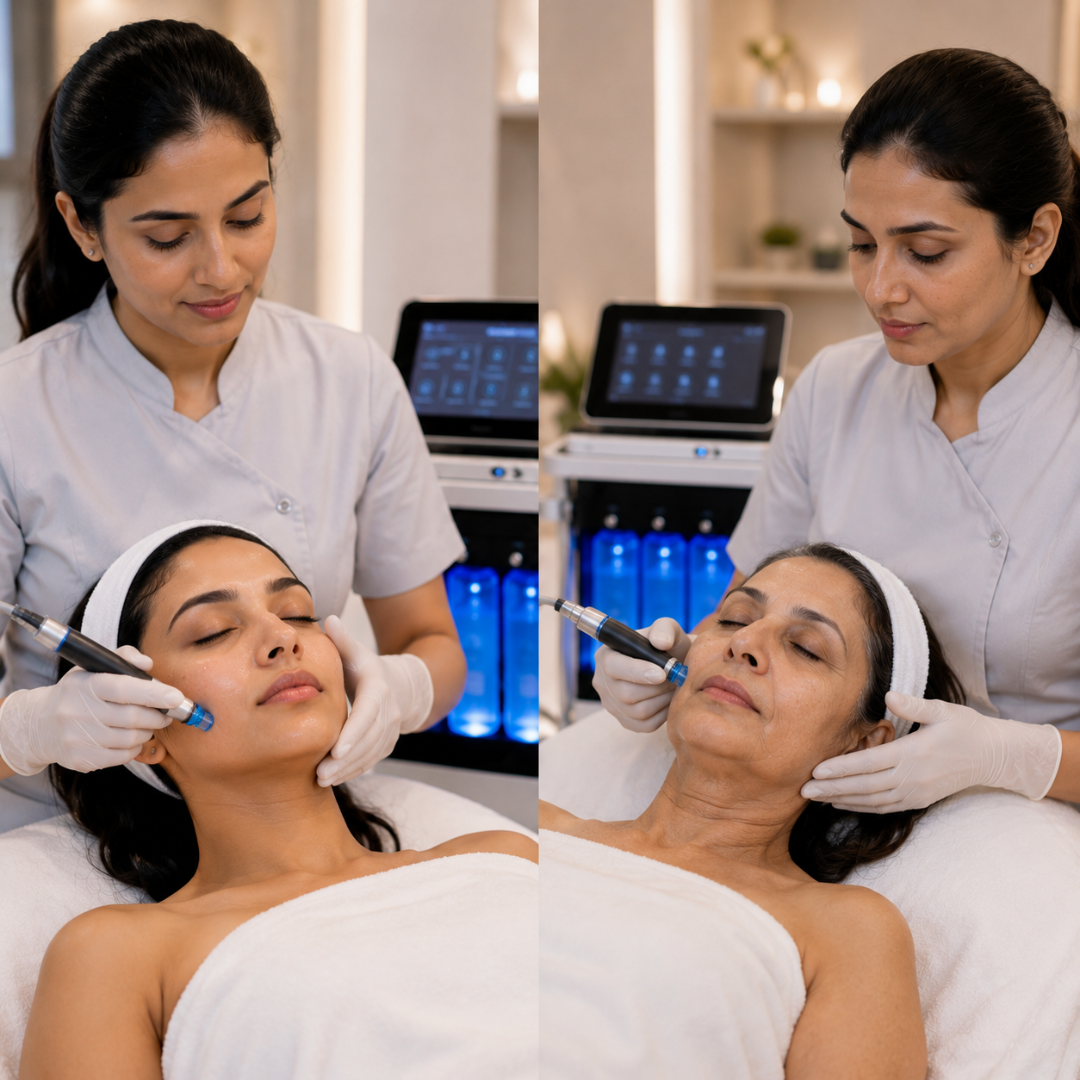
Younger Skin vs Ageing Skin: How HydraFacial Results Differ
The treatment itself is the same, but the starting point is not, so the results land differently. The table below sums up the main differences.
|
Factor |
Younger Skin |
Ageing Skin |
|
Main role of the facial |
Maintains and prevents, keeps skin clear |
Revives a dull, tired, drier surface |
|
Visible change per session |
Subtle, skin already renews well |
Often more noticeable, from a lower baseline |
|
How long results hold |
Longer, thanks to faster renewal |
Shorter, slower renewal asks for more upkeep |
|
Best paired with |
A simple routine and sun care |
Other anti ageing steps for deeper lines and firmness |
|
Typical goal |
Glow, clear pores, prevention |
Hydration, brightness, smoother, softer lines |
In short, younger skin uses a HydraFacial mostly to stay clear and prevent problems, while ageing skin uses it to recover ground that time and dryness have quietly taken.
Neither response is better; they are simply different jobs. A person of 25 and a person of 50 can have the same facial and both be delighted, just as teenage and adult acne require different HydraFacial approaches to achieve the best results.
What HydraFacial Can and Cannot Do for Ageing Skin
This is where honesty matters, because ageing skin is where the boldest claims tend to get made.
A HydraFacial genuinely helps the surface signs of ageing. It deeply hydrates, clears the dull buildup that ages a complexion, smooths rough texture, softens the look of fine lines, and brightens age spots and uneven tone over a course. Plump, well-hydrated skin simply reads as younger, and that effect is real.
This is also why it pairs so well with a good home routine. The facial resets the surface, and steady daily care holds and stretches what it achieves.
What it cannot do is just as important to know. A HydraFacial does not erase deep, set-in wrinkles, it does not restore lost facial volume, and it does not tighten sagging skin. Those changes come from deeper layers and need treatments built for them. A HydraFacial is a wonderful foundation and a real glow, not a substitute for those.
How Often Does Ageing Skin Need HydraFacial
Because ageing skin renews slowly and loses moisture faster, it usually does best with a steadier rhythm than younger skin needs.
Many people over 40 begin with a short series of sessions close together to revive a dull, dehydrated complexion, then move to regular maintenance to keep the results going. Younger complexions can usually leave longer gaps between appointments because they recover more efficiently on their own. As the years pass, longer breaks between sessions tend to allow more dryness and dullness to return. The ideal schedule depends on your skin, your concerns, and even the season, so it is best tailored by your clinic rather than following a fixed timetable.
Getting the Most from HydraFacial as Skin Ages
A HydraFacial works best for ageing skin when it sits inside a wider plan, rather than carrying everything on its own.
Day to day, the basics do the heavy lifting, gentle cleansing, rich hydration, and sunscreen every morning, since the sun is the single biggest driver of how skin ages, especially in our climate. Adding well-chosen nourishing actives at home, and pairing the facial with treatments aimed at firmness or deeper lines where they are needed, lets each part do what it does best.
Conclusion
An in-clinic HydraFacial is well worth it for ageing skin, as long as you go in with the right expectations. On ageing skin, it often gives a more visible boost in hydration and glow than it does on younger skin, while asking for a little more upkeep to keep that result.
Used honestly, as a foundation for hydrated, brighter, smoother skin rather than a cure for deep lines or sagging, it earns its place in almost any anti-ageing routine.
Curious what a HydraFacial could do for your skin at this stage of life? Our Coimbatore and Chennai teams can look at where your skin is now and shape a plan around its age and its goals. Reach out to Tune Clinical Aesthetics to make a start.