Why People Are Switching from Regular Facials to HydraFacial
Introduction
Walk into any clinic in India today, and you will notice a quiet shift. Clients who once booked a monthly salon facial are now choosing HydraFacial, and many no longer go back. This is not a marketing fad. There are real reasons why HydraFacial is often preferred over regular facials, especially for clients dealing with humidity, pollution, oily skin, pigmentation, or early signs of ageing. This guide explains how the two treatments compare and how to decide if a HydraFacial treatment is the right move for your skin.
What People Mean by a Regular Facial
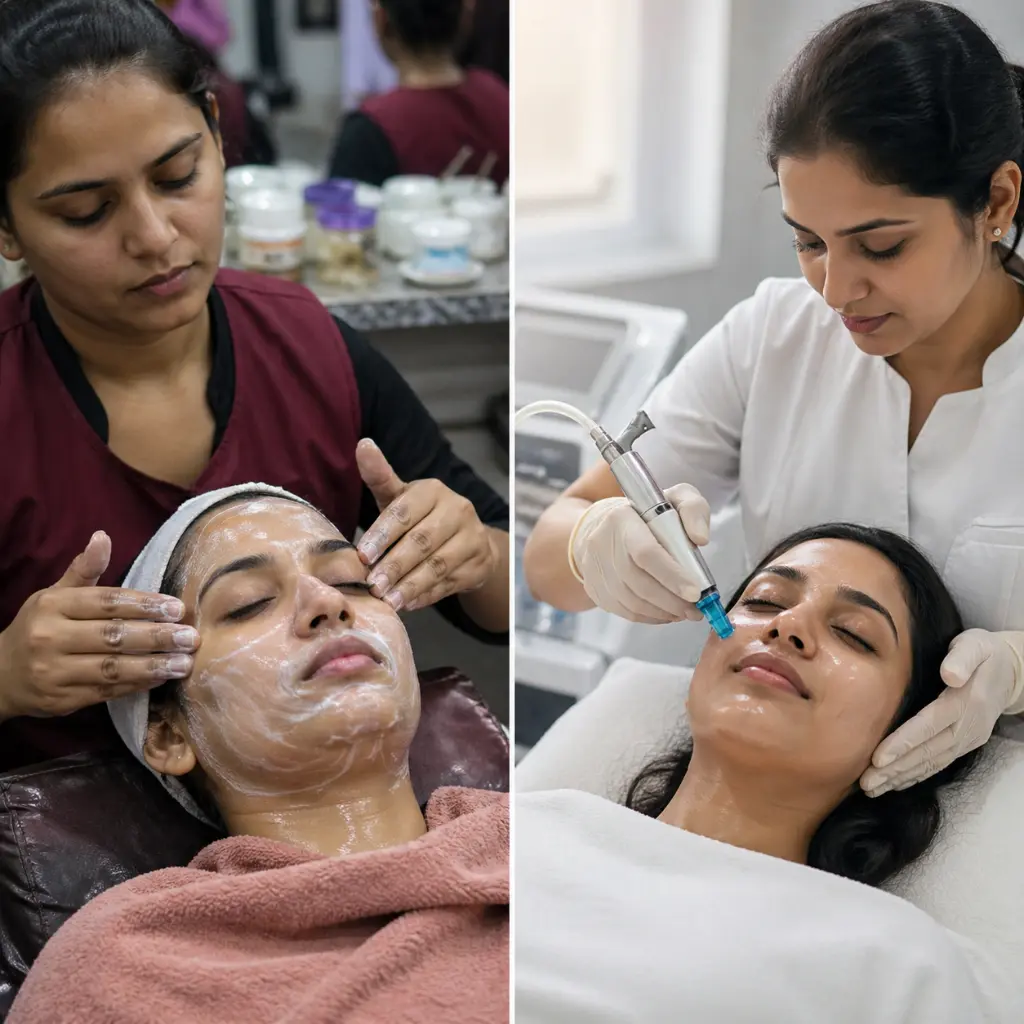
A regular facial usually refers to the classic salon style facial. The steps are familiar to most Indian clients. A cream cleanser, a manual scrub, steam to open the pores, manual extraction by hand or with a metal tool, a face pack, and a moisturiser to finish. Sometimes a massage is added.
These facials have been a staple in Indian skincare for decades. They are affordable and give a temporary refreshed feeling. But the limitations are also becoming clearer to clients who want results that hold longer than a single weekend, and who want a process that does not stress already congested or sensitive skin.
How the Two Compare
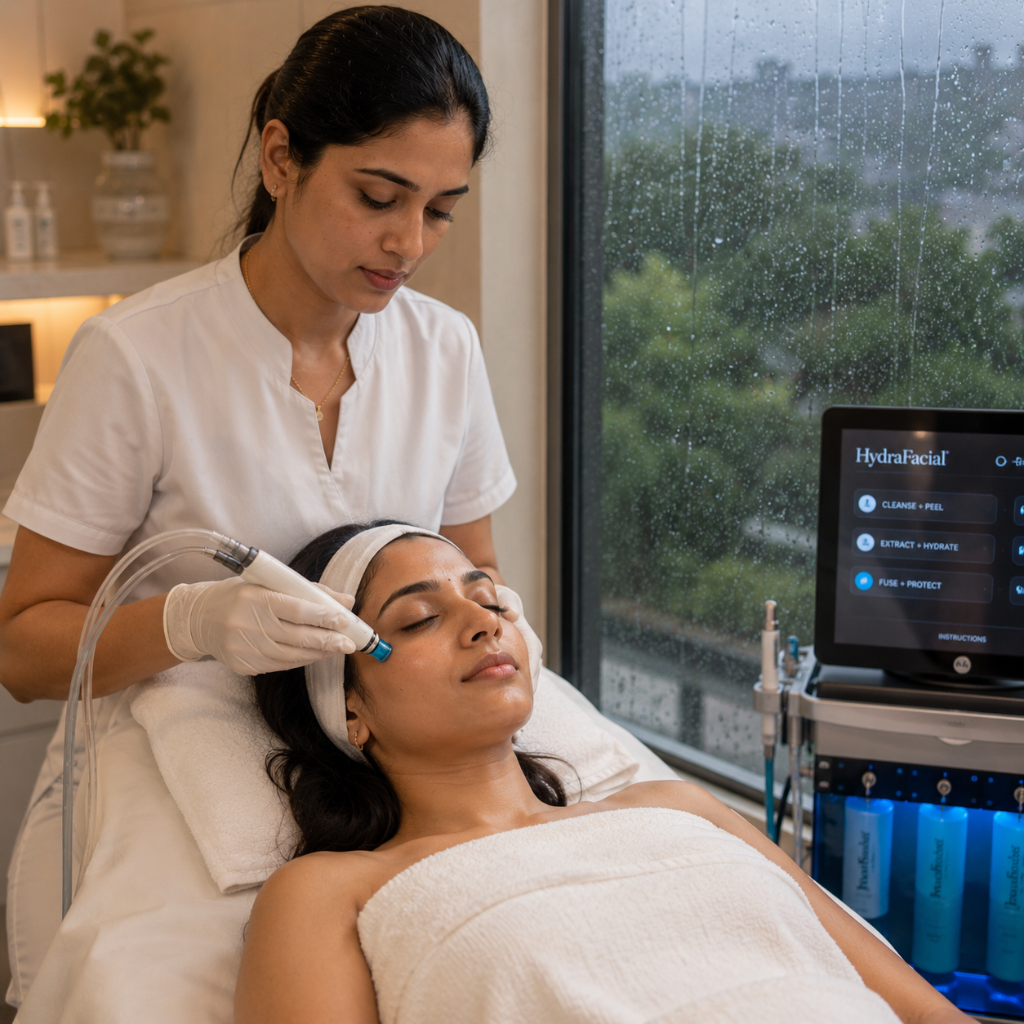
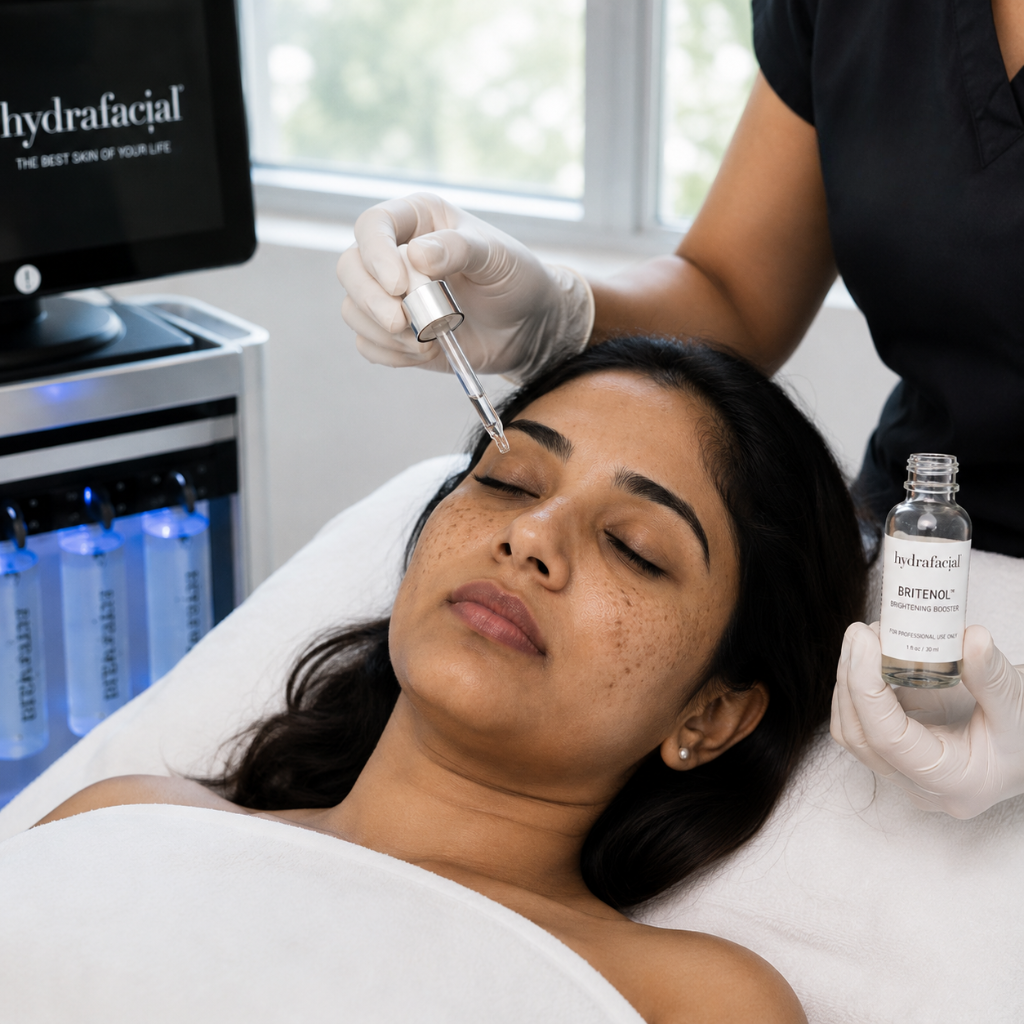
A HydraFacial uses a specialised device that performs cleansing, exfoliation, painless extraction, and serum infusion in one continuous process. Suction levels are controlled, serums penetrate evenly, and extraction does not depend on manual squeezing. The same skin gets cleaner, more hydrated, and less irritated than after a manual session.
Here is how the two treatments line up across the points clients ask about most.
|
Factor |
Regular Facial |
HydraFacial |
|
Cleansing depth |
Surface level only |
Reaches into pores |
|
Exfoliation |
Manual scrub, can be abrasive |
Controlled chemical and physical |
|
Extraction method |
Manual squeezing, often painful |
Painless, vacuum based |
|
Serum delivery |
Sits on the surface |
Infused into prepped skin |
|
Customisation |
Limited, fixed sequence |
Adjustable boosters and settings |
|
Result duration |
A few days to a week |
Three to four weeks |
|
Comfort |
Steam and squeezing can irritate |
Calm, no downtime |
|
Suitability for sensitive skin |
Risky with active breakouts |
Gentler with adjusted settings |
These differences are not small details. Most clients feel them in the first session itself.
The Honest Reasons Behind the Switch
The points clients tell us most often when they explain why they switched are not always the ones in marketing materials.
The first is time efficiency. A traditional facial often takes over an hour. A HydraFacial finishes in thirty to forty five minutes and fits into a working professional's day without needing extensive recovery time afterwards.
The second is predictability. With a regular facial, results depend heavily on the technician's hands. One session might feel great, the next leaves the skin red and uncomfortable. A HydraFacial produces a more consistent outcome each time because the technology takes most of the variability out of the process.
The third is not having to hide for a day. Indian clients often book facials around social events, weddings, and family functions. The pressing, redness, and sometimes broken skin that follows a manual extraction can ruin those plans. A HydraFacial usually leaves the skin looking immediately fresher rather than visibly worked on.
Where Regular Facials Still Have Their Place
Switching does not mean regular facials have no value. They do, in specific situations.
A traditional facial works well for someone whose skin is in good condition and simply wants the relaxation of a longer, massage focused session. The face massage is something a HydraFacial does not focus on, and many clients enjoy that ritual aspect of a long salon style facial. There is also a cost difference, which we will address in the next section.
The shift to HydraFacial usually happens when the goal moves from pleasant relaxation to actual skin improvement, and when clients begin asking more from their treatments than just a temporary glow. For those considering a more results driven option, a HydraFacial session offers a clearer comparison in terms of consistency and outcomes.
Cost, Frequency, and How to Make the Switch
A HydraFacial typically costs more than a salon facial. But because results last three to four times longer, the cost per week of glowing skin often works out closer than expected.
Many clients shift from monthly facials to a HydraFacial every six weeks, which balances both results and spend. Seasonal factors also play a role, and understanding how HydraFacial fits into summer skincare can help you plan your sessions more effectively.
You do not have to choose one and abandon the other entirely. A practical pattern many clients follow is:
- Test it once for a wedding, festival, or important event to see how your skin responds.
- Alternate the two during the first three to four months, with a HydraFacial every six weeks and a relaxing facial in between if you enjoy that experience.
- Replace fully if your skin clearly responds better and you are spending less in the long run on touch ups, products, and quick fixes.
Your specialist can suggest a frequency that fits your skin type, your concerns, and your budget rather than pushing a fixed plan.
Who Will See the Biggest Difference
Some clients notice a more dramatic shift than others when they switch.
- People dealing with congestion, whiteheads, or breakouts that monthly salon facials no longer manage
- Skin that turns red, sore, or flaky after manual extraction every time
- Pigmentation, dullness, or uneven tone that a face pack alone cannot lift
- Clients in their thirties and forties who are noticing fine lines, loss of firmness, or early signs of ageing that a regular facial does not address.
- Clients who travel often, work in air conditioned environments or commute outdoors and need results that hold longer than a few days.
- Sensitive or acne prone skin types that need a gentler, controlled process
If your skin is generally well-behaved and your monthly routine still works for you, there is no urgent need to change. The switch makes most sense when you are not getting what you want from your current facial.
Conclusion
The reason people are switching is simple. They want their facial to actually do something for their skin, not just feel pleasant for an hour. HydraFacial brings the depth, customisation, and lasting results that regular facials in India climate struggle to match, while also being gentler on sensitive and acne prone skin. If you are thinking about making the switch but want clarity on how it suits your skin and your budget, the team at Tune Clinical Aesthetics will assess your skin and recommend the right starting point.