Chemical Peel or Laser for Tan Removal: Which One Is Right?
TLDR Chemical peels and laser treatments both remove tan, but they work at different depths and suit different skin types. This guide helps you figure out which one is right for you.
Introduction
You have tried the home remedies. You have been consistent with sunscreen. And yet, the tan is still there.
At some point, the question stops being "will it fade?" and becomes "which treatment should I actually go for?"
Chemical peel or laser. Both get recommended, both sound promising. But they are not the same, and choosing the wrong one for your skin type or tan depth can mean more sessions, slower results, and a longer road than necessary.
By the end of this guide, you will know exactly what each treatment does, which one suits your skin, and what to expect. If you are already considering professional tan removal treatments, understanding the difference between these options is essential.
How Chemical Peels Work
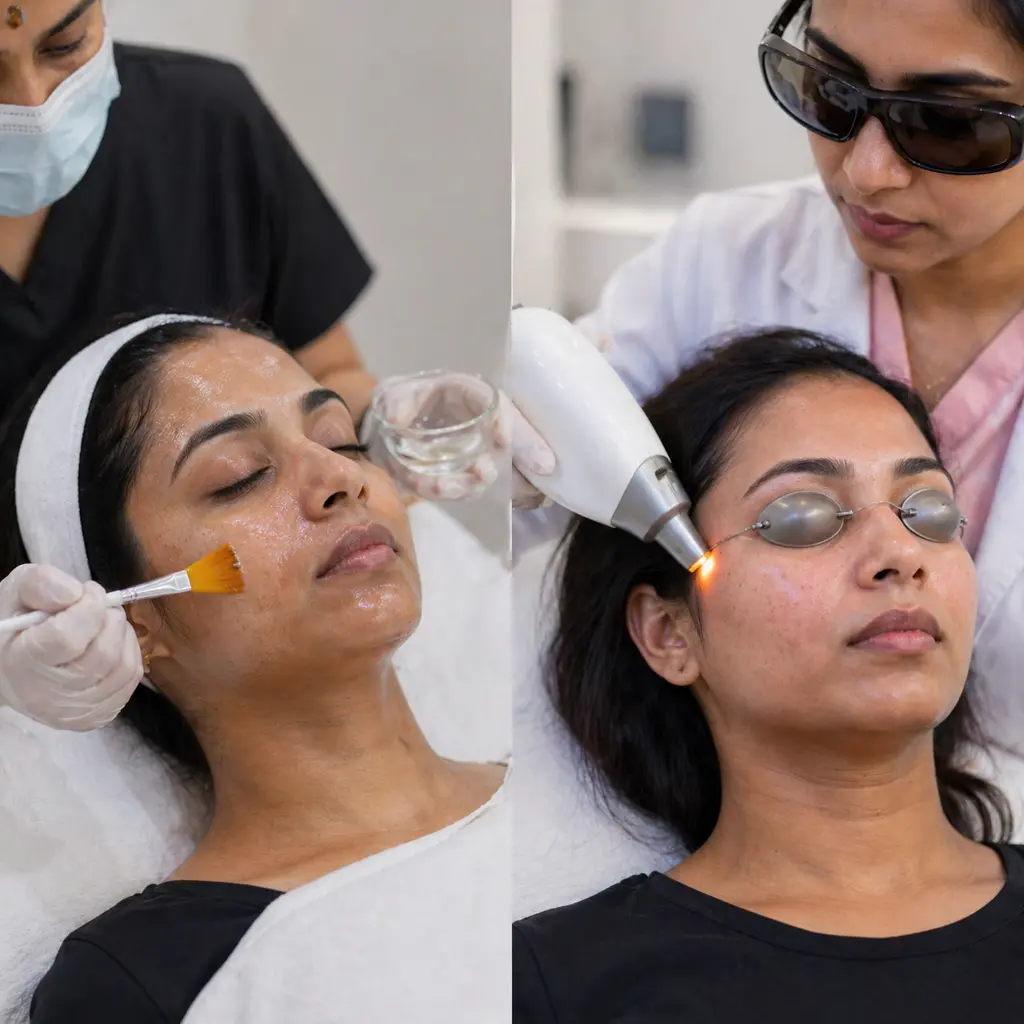
A skin specialist applies a carefully chosen acid solution that breaks down the bonds holding onto pigmented, dead skin cells, the ones carrying the tan. As that outer layer clears away, fresher and more evenly toned skin surfaces from beneath. The acid also triggers the skin’s natural cell turnover, so renewal continues well after your session ends.
Types of Peels
Superficial peels work on the outermost skin layer. Gentle, minimal downtime, and well-suited for mild or recent tan. Most people return to their normal routine the next day.
Medium-depth peels go further. They are better suited for moderate pigmentation and older tan that has not responded to lighter treatments. A few days of visible peeling are common, and that shedding is the treatment doing exactly what it should.
The right peel is always matched to your skin through a proper assessment.
What It Feels Like
Most peels start with a mild tingling or warmth as the solution activates on the skin. It typically settles within minutes. The session itself is short, often under thirty minutes, and the skin is neutralised and soothed before you leave.
Over the next few days, you may notice the skin feeling tighter or looking slightly flaky. This is normal. The tan is lifting as the treated layer sheds.
How Laser Treatment Works
Laser treatment approaches the problem from a completely different angle.
Rather than working on the surface, the laser sends targeted light energy directly to the melanin. The specific wavelength used is one that melanin absorbs. When that happens, the pigment breaks into tiny fragments, and the body clears them naturally over the following weeks.
The key advantage is depth. Laser reaches melanin in the deeper skin layers that peels cannot access.
Inside a Session
The skin is cleansed and prepared, then the laser device is moved steadily over the treatment area, delivering short pulses of light energy. Most people describe it as a mild warmth or a light snapping sensation. Sessions are brief, and any redness settles within a few hours.
Why Laser Suits Stubborn Tan
For a longstanding or deep-seated tan that has not responded to other treatments, laser is often the more effective option. Because it targets pigment below the surface, it does not need to strip away the outer skin to get results, making recovery more comfortable.
Side by Side
|
Factor |
Chemical Peel |
Laser Treatment |
|
How it works |
Sheds pigmented skin layers |
Breaks melanin apart with light |
|
Best for |
Mild to moderate, surface tan |
Deep, stubborn, longstanding tan |
|
Depth |
Outer to mid skin layers |
Deeper skin layers |
|
Downtime |
Light peeling for a few days |
Mild redness for a few hours |
|
Also improves |
Skin texture and brightness |
Deep pigmentation and dark spots |
Choosing the Right Treatment
Choose a chemical peel if your tan is relatively recent or mild, you want to address surface pigmentation while also improving skin texture and glow, or you are at the start of your treatment journey and want a gradual, controlled approach.
Choose laser treatment if your tan has built up over time, surface treatments have made little difference, or you are dealing with uneven patches, persistent dark spots, or discolouration that feels well established. If you are planning full body treatment, it helps to understand what to expect across the full course before you begin.
Chemical peels and lasers are not competing options; they complement each other. Peels clear and refine the surface layers, while the laser addresses the deeper pigment beneath. Used in the right sequence, they cover the full depth of the problem. For anyone dealing with both surface tan and deeper discolouration, a combined approach often delivers the most complete result.
Frequently Asked Questions
Can chemical peels and lasers be used on the same area of skin? Yes, but not in the same session and not without proper planning. A specialist will space them so each treatment has its intended effect without overstressing the skin.
Which treatment is gentler on sensitive skin? Superficial peels are generally the gentler starting point, with lower-strength acids matched to skin tolerance. Laser can also be adjusted for sensitive skin through wavelength and energy settings. The decision always comes down to a skin assessment rather than a blanket rule.
Do these treatments work on the body as well as the face? Both can be used on body areas, with the approach and product strength adjusted for different zones. The face, neck, arms, back, and legs each have different skin characteristics, and treatments are calibrated accordingly.
Conclusion
Chemical peels and laser treatments are both effective and well-established options for tan removal. They are not in competition. They simply work at different depths and suit different situations.
A peel renews from the surface down. Laser works from the inside out. Together, they address the full picture.
The best choice and the best results always start with understanding your skin properly.
Take the First Step
At Tune Clinical Aesthetics, every consultation begins with a thorough skin assessment so you know exactly what is going on, what will work, and what to expect realistically. Whether it is a chemical peel, laser treatment, or a combination of both, we will help you find the right path.
Visit tuneaesthetics.com to learn more or get in touch today.