Sun Tan vs Pigmentation: What's the Difference?
TLDR
Sun tan and pigmentation both involve melanin, but they have different causes, sit at different depths, and need different treatments. Knowing which one you are dealing with is the first step toward clear skin.
Introduction
Most people notice their skin has darkened and assume they know what they are dealing with. But sun tan and pigmentation are two distinct conditions that look alike on the surface while behaving very differently underneath. Treating one as if it were the other is one of the most common reasons people waste money on approaches that simply do not work.
This guide breaks down what separates them, how to recognise which one you are dealing with, and why the distinction shapes every treatment decision. For those specifically looking to address tanning, options like body tan removal treatments can be explored based on your skin type and concern.
The Shared Root: Melanin
Melanin is the pigment that gives skin its colour, produced by melanocytes in the lower layers. When the skin perceives a threat, most commonly UV, it responds by producing more melanin as protection. This darkens the skin.
Both sun tan and pigmentation come from the same mechanism. The difference lies in what triggers it, how deeply the melanin is deposited, and whether the skin can clear it on its own.
Sun Tan: A Uniform Response to UV
Sun tan is a direct response to UV. When UV hits the skin, melanocytes increase melanin production to absorb and neutralise the radiation before it damages deeper tissue. The result is visible darkening across areas that received direct exposure.
Sun tan develops in the epidermis, the outermost layer. As the skin renews through its natural cycle, the pigmented cells move upward and shed, and the darkening fades. A fresh sun tan can fade in a week or two without further exposure.
However, when tan accumulates over months or years without being cleared, the picture changes. Repeated exposure leads to melanin building up layer by layer, eventually settling deeper into the skin where it no longer behaves like a fresh surface tan. At that stage, choosing between home care and clinical treatment becomes a more practical decision.
Pigmentation: A Deeper, Multi-Cause Condition
Pigmentation is a broader category of skin darkening caused by excess melanin that has settled in a way the skin cannot clear on its own. Unlike sun tan, it does not always originate from sun exposure, it can be triggered by hormonal changes, inflammatory responses, certain medications, or genetic predisposition.
The Different Forms
Melasma refers to large, irregular patches, most often across the cheeks, upper lip, and forehead. It is strongly linked to hormonal fluctuations and deepens with sun exposure.
Post inflammatory hyperpigmentation appears as dark marks left behind after skin inflammation such as acne, a rash, or any injury. The melanin here is part of the skin’s repair response rather than UV protection, and these marks can persist for months.
Freckles and sun spots are triggered by UV exposure but involve melanin that has settled over time. They deepen with repeated exposure and do not resolve with basic exfoliation.
Why It Persists
Pigmentation sits in the mid or lower layers of the epidermis, and in some cases extends into the dermis. At that depth, the skin's natural shedding cycle cannot clear it, which is why it persists for months or years without targeted intervention.
Side by Side
|
Feature |
Sun Tan |
Pigmentation |
|
Primary trigger |
UV exposure only |
UV, hormones, inflammation, genetics, or medication |
|
Depth |
Surface layers only |
Can sit deep in the skin |
|
Pattern |
Even across exposed areas |
Uneven, patchy, or localised |
|
Duration untreated |
Days to weeks |
Months to years |
|
Response to sun avoidance |
Fades naturally |
Does not fade on its own |
|
Treatment approach |
Surface renewal |
Targeted depigmentation after assessment |
Reading Your Own Skin
Where it appears. Sun tan shows up only on sun-exposed areas. Pigmentation can appear in covered areas, on one side of the face, or symmetrically across the cheeks and forehead.
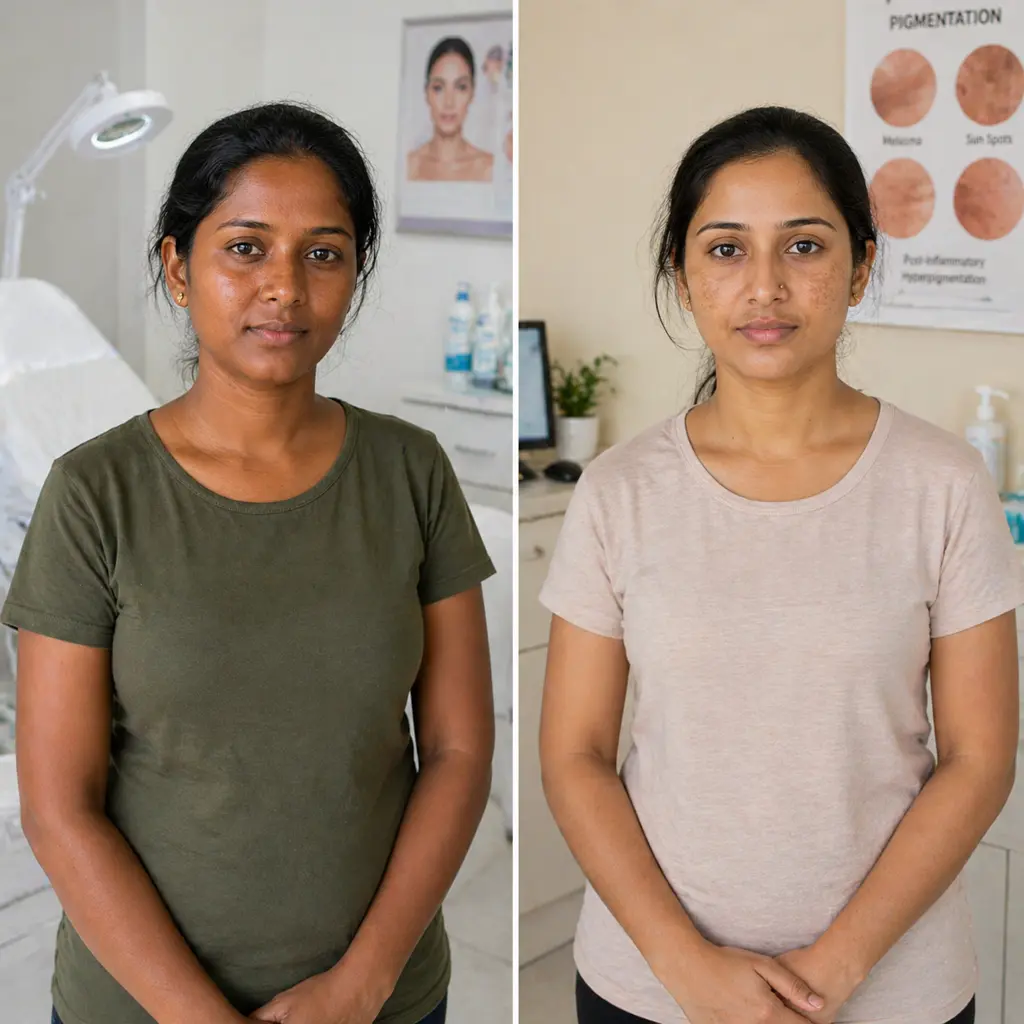
How uniform it is. Fresh sun tan darkens the skin evenly. Pigmentation is typically patchy, irregular, or concentrated in specific zones.
How long it has been there. If darkening has not faded after a few weeks of sun avoidance, it is unlikely to be a straightforward tan. Persistent darkening lasting months signals something deeper.
Whether it shifted over time. A holiday tan will fade. Pigmentation that appeared after a hormonal change, stress, or skin inflammation tends to remain stable or worsen rather than clearing.
Why the Wrong Diagnosis Leads to the Wrong Treatment
Sun tan and pigmentation respond to different approaches, and applying the wrong one does not just fail to help, it can make the skin worse.
Aggressive exfoliation applied to active pigmentation, particularly melasma, can worsen the condition by creating inflammation that triggers further melanin production. Surface brightening will not make a meaningful difference to deep pigmentation because it cannot reach the layers where the melanin sits. Clinical protocols must be carefully matched to the type and depth of the condition, as the wrong one can create uneven results or rebound darkening.
When Both Conditions Coexist
It is common to have both active sun tan across exposed areas and underlying pigmentation in specific zones, one masking the other. A skilled specialist identifies both during assessment and plans treatment in a structured sequence, usually starting with the tan layer and then addressing the pigmentation beneath. Rushing in without separating the two tends to produce patchy, inconsistent results.
Frequently Asked Questions
Can pigmentation be treated the same way as tan? Not with the same approach. Surface exfoliation is not effective for pigmentation in deeper layers. The specific treatment also depends on the type, as melasma, post inflammatory hyperpigmentation, and sun spots each respond differently and may require very different protocols.
Does sun protection help with both tan and pigmentation? Yes. Sun protection is essential for managing both tan and pigmentation. It does not remove existing tan or pigmentation but prevents UV from darkening and supports clinical treatment results. Without consistent broad-spectrum sun protection, both can return or worsen within weeks.
Conclusion
Sun tan and pigmentation share a common root in melanin but are distinct conditions with different causes and treatment needs. Knowing which one you are dealing with is the most important step before pursuing any treatment, as the right diagnosis protects you from wasted effort and points you toward an approach that actually works.
Know Your Skin. Treat It Right.
At Tune Clinical Aesthetics, every treatment begins with an accurate skin assessment. Whether you are dealing with tan, pigmentation, or both, we identify the root cause first and design a plan that addresses it precisely.
Visit tuneaesthetics.com to take the first step.